
Episode 3: LinkedIn distribution that isn't spam, why nobody cares about your content, and how to get a 57% reply rate
Two non-technical marketers figuring out Claude Code live on air, every Thursday.


This week, we talked about B2B LinkedIn distribution. Between Bojana working at HeyReach (a LinkedIn automation tool) and me running a B2B agency, we had a LOT to say. Bojana also shared exactly how she got a 58% reply rate in one of her outreach campaigns. Yes, 58%. Stay for that one.
My mic died in the last 60 seconds, so the tradition of something breaking every episode continues. We are nothing if not consistent.
The golden rule of marketing: One piece of content should become at least 10
Bojana walked through how HeyReach handles distribution internally. Every piece of content they create gets broken down into at least 10 other pieces. YouTube video becomes shorter clips, blog placements, newsletter content, community posts, sales enablement material.
Their sales team picks up content organically and uses it in outbound without much internal coordination. That’s a great sign that you’re creating content that is valuable. When you have to BEG sales to use your content, go back to the drawing board.
Here’s a good example from one of my clients:
One webinar (live event) gets turned into → An edited full event recording for YouTube → Short clips for LinkedIn → LinkedIn articles → Blog post recaps → Email recaps → LinkedIn outbound follow-up messages → Outbound email for a specific industry/role.
How to know if your content will work
A lot of teams make content, get excited because they put effort and time into it, but fail to put themselves in their ICP’s shoes and ask a very simple question: why would anyone care about this?
So, before you yeet your next LinkedIn automation campaign into people’s inboxes, ask yourself: “Why would we care about this? Is it valuable to the person you’re sending it to?” You need to know exactly who it’s for, why they’d care, and what you want them to do next.
“Book 30 minutes with me” is a massive ask from a stranger. You need to warm up to that. Stop sending it cold.
On that note, we both agreed that extreme personalization in outreach is mostly creepy.
The “I saw you engaged with this post” and “I noticed you live in Austin” messages are giving restraining order. And we all know you sent that to 700 people.
Relevance is key here.
Bojana gets hundreds of DMs. The ones she actually responds to aren’t personalized but relevant to her. The person actually did their homework and has a concrete ask. Ain’t nobody got time for a random “let’s connect”.
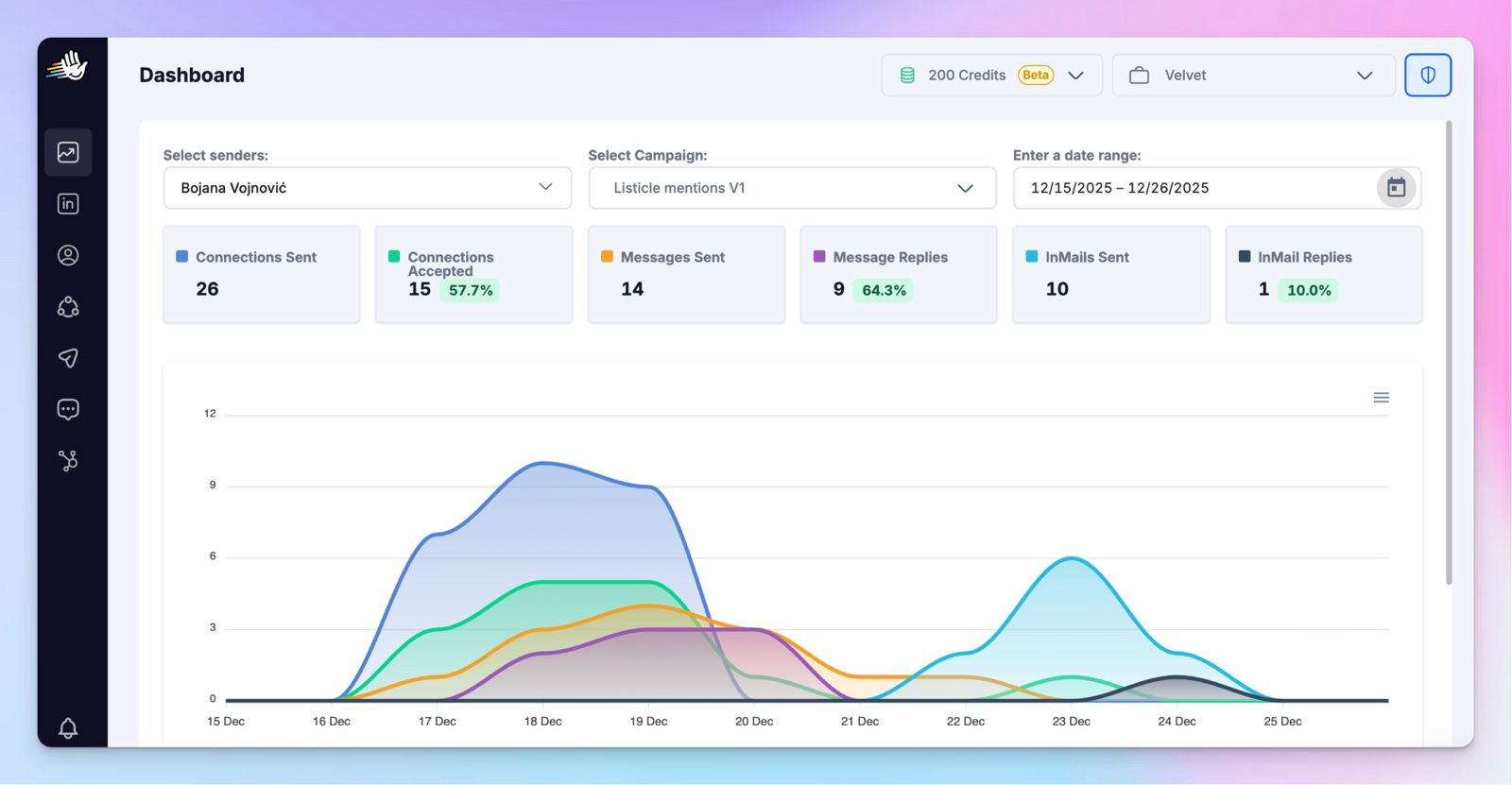
That’s also exactly how Bojana managed to get a 58% reply rate in her own campaign. In terms of industry standards, this number is unheard of. I gasped when she showed me the stats.

Her link building campaign: she used Claude connected to Ahrefs via MCP, pulled competitor analysis, enriched the data through Clay, fed it into HeyReach. The message was basically “hey, you have this listicle where HeyReach isn’t mentioned, if you’re open to featuring us let me know, if not no hard feelings.”
She got a 58% reply rate because her brand was already familiar and the ask was actually relevant to the person she was reaching out to. AND easy to act on!
Your ICP matters more than your message
I used Claude Code to define the ICP for our “Two girls, one Claude” content series (busy B2B marketers, mid-to-senior level, time poor, curious about AI but skeptical of hype) and asked it to suggest distribution channels.
I scraped all RSVPs from our first LinkedIn live, which gave me a 78 person list to dig into and figure out who is interested in our content. The answer wasn’t that surprising, but I’m curious to see how it will evolve as we cover more topics in future live events. Maybe we’ll even get some developers to join!
Some suggestions for distribution channels were good: Substack, LinkedIn, YouTube. Some were not for us: community Slack channel (neither of us has time to manage that), podcast feed (this is not a podcast), paid ads (budget is zero besties). Up to you and the vision you have for your brand!
Overall, a good brainstorm to do with Claude before you decide on your distribution strategy.
You need to be extremely clear about WHO you’re talking to before you think about what to send them.
Content inflation leads to content recession
If you’re pushing volume for volume’s sake, you’re devaluing everything. Not every piece is for every channel. And if you’re segmenting your audience, what’s exciting for one group is boring or overwhelming for another.
Distribute accordingly. Or don’t distribute at all.
LinkedIn carousels: the experiment
Bojana’s been testing carousels this year after they performed terribly in 2025 (sub-1k reach vs 5k+ on text posts). They’re starting to pick up. She usually writes a blog post, feeds it to Claude Chat with brand guidelines, gets a carousel draft, takes the HTML into Claude Code, export as downloadable PDF. 10 extra minutes vs 3 hours in Figma.
My advice is to go straight to Claude Code with all of this. No need to jump between chats when Claude Code can take care of it all.

How to build a LinkedIn outreach campaign from scratch
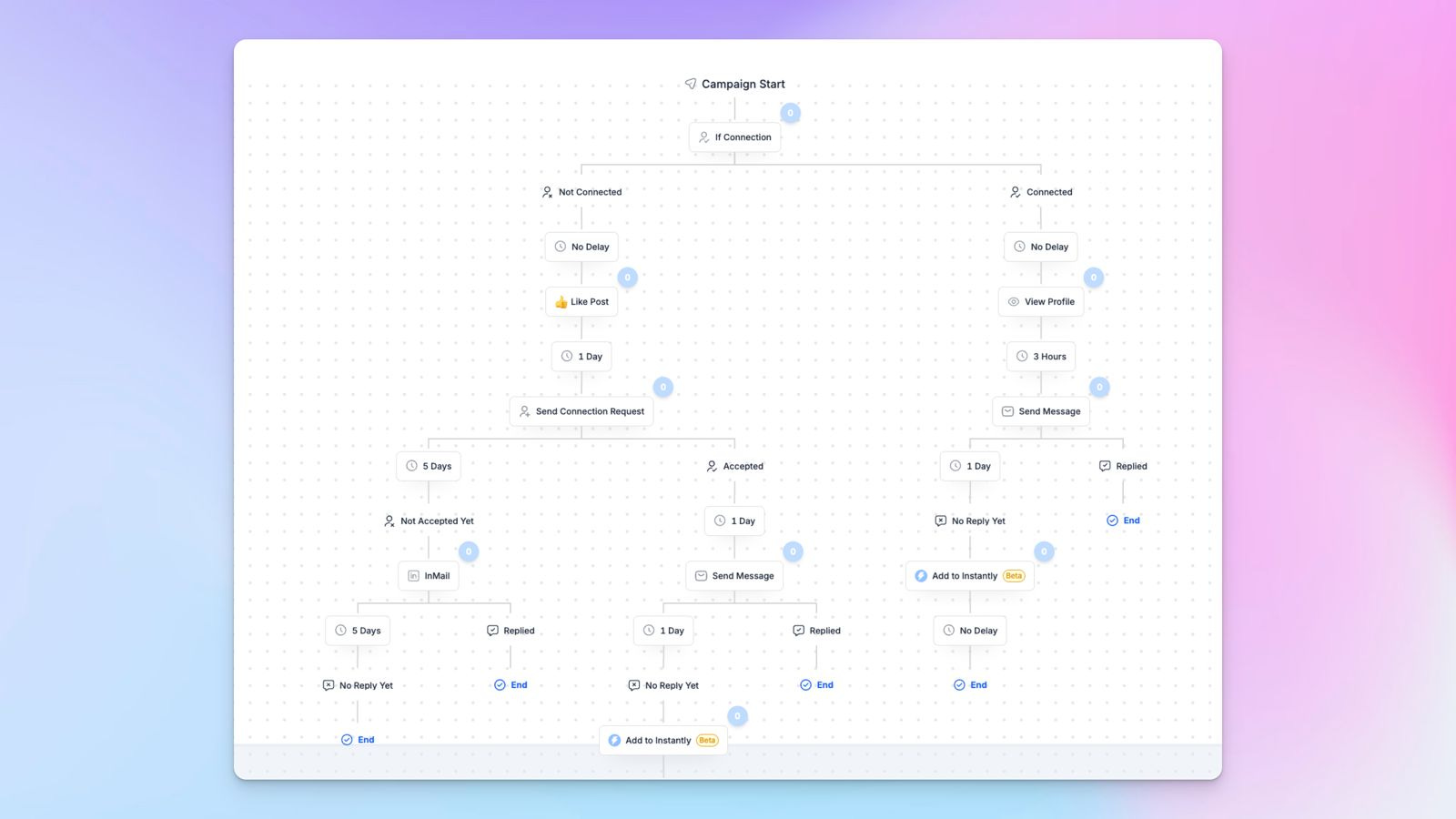
Bojana did a live walkthrough of setting up an entire new outreach campaign in LinkedIn. Here’s what one of her best performing campaign structures looks like. Watch our full video for her reasoning for each of the steps in this capaign.
She also made a point about not adding a message to your connection request unless you have something genuinely specific to say (like referencing a shared event). Blank connection requests actually convert better.
Resources from this episode
HeyReach (LinkedIn outreach and distribution tool, Bojana’s team)
Trigify (signal-catching tool for finding leads from events and competitor content)
Clay (data enrichment for building lead lists)
Ahrefs (SEO tool, connects to Claude via MCP)
Diandra Escobar’s LinkedIn profile optimization guide (on HeyReach’s blog and YouTube)
What’s coming next
In one of our previous episodes, we built our website and content workflow that will help us populate it with content weekly. But actually deploying it is a different beast so we’re devoting a full episode to it this week.
If you never actually deployed anything with Claude Code, join us to see how that works. DNS records, domain transfers, and whatever else breaks.